Twentieth Century Punjabi Poetry

This course offers a fresh reading of the major literary, intellectual, and socio-political developments that shaped Punjabi poetic expression throughout the twentieth century. Situating poetry within the broader contexts of colonial modernity, print culture, reform movements, the Indian nationalist movement, the Partition, and postcolonial transformations, the course foregrounds the dynamic interplay between history and literary form. By integrating historical inquiry with literary criticism, the course positions Punjabi poetry as a critical site for examining modernity, identity formation, and the aesthetics of experience in South Asia. It'll be a 13-week course. The medium of insrtruction will be English.
|
Course Syllabus |
|
Historical & Literary Background |
|
Week 2 – Tradition and Transition: Nath-Sidh literature • Sikh literature • Sufi Poetry • Qissa tradition • War Ballads • Devotional Poetry • Emergence of modern poetic forms |
|
Modernity, Romanticism, and Punjabi Poetry Week 3 – Bhai Vir Singh • Religion and Mysticism • Nature and Lived Religiosity • Selected poem analysis |
|
Week 4 – Puran Singh: Modernity and Transcendentalism • Religion and the Poetics of Space |
|
History and Nationalism Week 5 – Dhani Ram Chatrik and Kirpa Sagar: Religion and Nationalism • Romanticism and Historical Consciousness Poetry of Resistance: Anti-colonial struggle • Ghadar Movement • Akali Movement |
|
Progressive Poetry and Feminine Voices Week 6 – Trends in Punjabi Progressive Poetry: Mohan Singh • Bawa Balwant • Pritam Singh Safir • Faiz Ahmed Faiz • Lal Singh Dil • Pash
|
|
Week 7 – Amrita Pritam and Prabhjot Kaur: Communalism • Progressivism • Feminism • Love and Separation • Femininity and Mysticism
|
|
Review and Midterm Examination |
|
The Partition Week 8 – Historical Context of Partition: Communalism in Punjab • Nihilism and Nationalism |
|
Week 9 – Poems on the Partition: Ferozedeen Sharaf • Ahmed Rahi • Gurmukh Singh Musafir • Barkat Ram Yuman • Charaghdeen Daaman • Amrita Pritam • Harbhajan Singh • Jaswant Singh Neki • Munir Niazi • Harinder Singh Mahboob |
|
Lyric Poetry Second Phase: Kulwant Singh Grewal • Navtej Bharti • Amarjit Chandan |
|
New Openings Week 11 – Existentialist and Experimentalist Poetry: Amrita Pritam • Haribhajan Singh • Sukhpalveer Singh Hasrat • Ajaib Kamal • Ravinder Ravi Punjabi Ghazal: Sadhu Singh Hamdard • Jagtar • Surjit Patar • Rauf Sheikh • Sharif Kunjahi |
|
Violence and Trauma Week 12 – Violence and Trauma (1980s): Afzal Ahsan Randhawa • Haribhajan Singh |
|
Week 13 – Memory and Displacement: Harinder Singh Mahboob |
|
Review and Final Examination Week 14 – Review |
|
Week 15 – Final Examination |
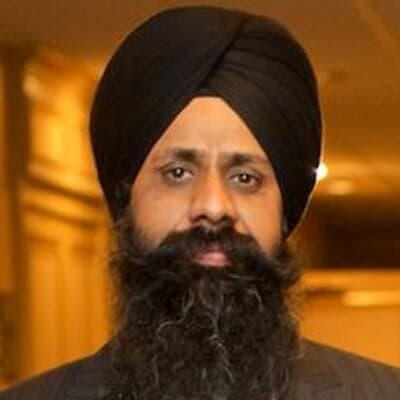
Lecturer: Prabhsharandeep Singh
Prabhsharandeep Singh is a Sikh scholar whose research involves areas such Sikh Studies, Study of Religions, Religious Experience, Religion and Literature, Religion and Violence, Postcolonial Theory, Intellectual History, and Continental Philosophy. He has Masters in English (Punjabi University), Masters in Study of Religions (SOAS, University of London), DPhil cand. (University of Oxford). He writes poetry in Punjabi and English. He has recently published a collection of Punjabi poetry titled Des Nikala that has poems on the themes such as exile, memory, trauma, time, and language.